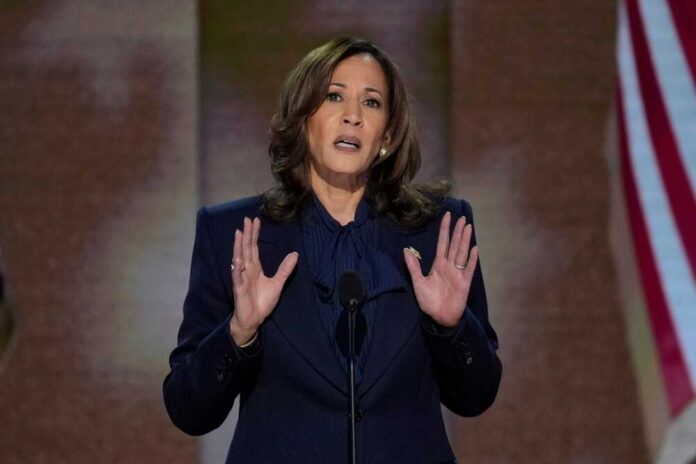
Kamala Harris is now telling Democrats the American Dream is “more of a myth than reality,” a blunt admission that lands differently when it comes from a leader who helped run Washington for four years.
Quick Take
- Harris delivered the “myth” line at a DNC-related event on Dec. 12, 2025, arguing public trust has been damaged by both parties.
- She pointed to AI-driven job disruption, divisive social media, and concentrated elite power as reasons many Americans feel stuck.
- Polling cited in coverage found 46% of Americans say the American Dream “no longer exists,” with higher skepticism among Democrats and younger voters.
- On her book tour, Harris has shifted from diagnosing the problem to calling for a “revival” centered on affordability and civic renewal.
Harris’s “American Dream” warning reflects a deeper crisis of trust
Kamala Harris used a December 2025 speech tied to the Democratic National Committee to tell fellow Democrats that “for so many, the American dream has become more of a myth than reality.” The line was not framed as a partisan jab alone; Harris also argued both parties have contributed to a breakdown in public trust. She previously described the political system as “broken” in a late-night TV appearance earlier in 2025.
Harris’s framing matters because it concedes, in plain language, what many voters already feel: the country’s institutions look unresponsive, and economic mobility feels harder to reach. Conservatives who have long criticized elite-driven governance will hear an echo of their own complaint, even if they disagree with Harris’s preferred fixes. For Democrats, the message doubles as a warning that anti-Trump energy alone may not persuade households focused on bills, housing, and job security.
Poll numbers show pessimism is mainstream, not fringe
Coverage of the speech cited polling showing 46% of Americans agree the American Dream “no longer exists,” with skepticism higher among Democrats and younger people. That detail is important because it suggests Harris is not creating the mood; she is responding to it and trying to shape it. The political risk is obvious: leaders can validate discontent while still being held responsible for the conditions people are living under.
For voters over 40—especially those who watched wages lag behind costs in the 2020s—this kind of polling can feel like confirmation that the “rules” changed. Conservatives often blame overspending, high energy prices, and globalist policies that ship jobs overseas, while many liberals emphasize inequality and the cost of living. Harris’s comments attempt to bridge that divide by placing the blame on system-wide failures, but she offered no single, measurable benchmark for what “revival” would look like.
AI, social media, and “elite power” are becoming bipartisan targets
Harris highlighted AI-related job displacement, social media’s role in division, and the concentration of power among elites as drivers of the “myth” dynamic. Those points land in a political environment where voters increasingly suspect that powerful institutions—public and private—operate with limited accountability. Her emphasis on tech disruption is also a tacit admission that the economy can look strong on paper while still leaving workers anxious about replacement, pay, and stable career ladders.
From a conservative standpoint, the test is whether proposed solutions expand individual opportunity without growing bureaucracy that ends up serving the same elites it claims to restrain. Harris has talked on the book-tour circuit about policy areas like housing affordability, childcare, and regulating AI and social media, plus tax changes. The research provided does not include detailed legislative language, so it is not possible to evaluate costs, enforcement mechanisms, or how much federal power those ideas would require.
Her book tour pivots from diagnosis to “revival,” including immigration messaging
After the DNC speech, Harris continued a multi-city book tour and delivered related remarks in Arkansas, calling it “time for a revival of the American dream,” describing an agenda aimed at people doing more than “just getting by.” In early 2026, she also expanded the “myth” theme in Nevada by focusing on immigrant struggles. This broader messaging appears designed to keep Democrats engaged after the 2024 loss while setting a platform for upcoming elections.
The political reality is that “revival” talk will collide with two competing voter expectations. Many conservatives prioritize border enforcement, wage protection, and an “America First” economic approach, especially after years of illegal immigration and cost-of-living strain. Many liberals want expanded social support and protections for immigrant communities. Harris’s rhetoric tries to hold those constituencies, but the research provided does not show new consensus-building proposals that satisfy both concerns at once.
Sources:
Kamala Harris delivers reality check to bullish Democrats
Time to revive the American dream: Kamala Harris
Kamala Harris: a new incarnation of the American Dream?