When a sitting Democratic senator has to tell his own party to stop acting like “the tin foil hat brigade,” something has gone badly wrong in America’s information culture.
Quick Take
- Sen. John Fetterman (D-PA) publicly rejected “BlueAnon” claims that assassination attempts against President Donald Trump were staged.
- Fetterman cited his firsthand proximity to the April 2026 White House Correspondents’ Dinner shooting, saying it “was not staged.”
- A Newguard/YouGov poll found a sizable share of Americans either believe at least one attempt was faked or are unsure, with higher belief among Democrats.
- The dispute highlights a broader trust collapse that benefits neither party and makes political violence harder to confront honestly.
Fetterman’s blunt warning to Democrats
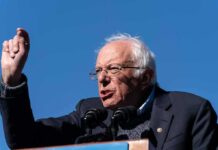
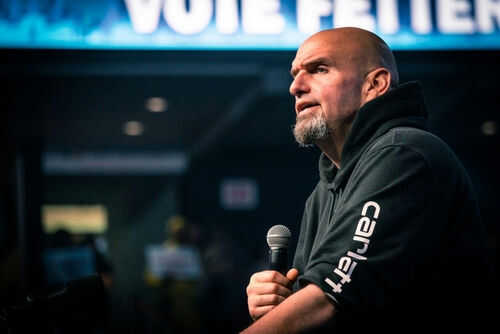
Sen. John Fetterman escalated a rare intraparty confrontation after conspiracy theories spread online claiming President Donald Trump’s assassination attempts were staged. In a May 11, 2026 post on X, Fetterman stressed that “Assassinations + political violence are real,” adding that his party “can’t be the tin foil hat brigade.” He pointed to his own experience at the April 25, 2026 White House Correspondents’ Dinner shooting, saying he was “a table away” and it “was not staged.”
That statement matters because it is not coming from a Republican defending a Republican president. It comes from a Democrat with direct proximity to a high-profile incident, using plain language to push back on a narrative that has circulated in progressive media spaces. It also reflects a growing pattern: Americans increasingly treat even verified acts of violence as marketing, propaganda, or “optics,” rather than as crimes that demand accountability and basic civic seriousness.
What the poll suggests about public trust
The Newguard/YouGov survey at the center of the story adds texture to why Fetterman intervened. According to the reporting, about 30% of Americans believe at least one of the attempts on Trump was faked, and the numbers rise when you isolate Democratic respondents. The poll also indicates widespread uncertainty across the three incidents, with major shares selecting “staged” or “unsure,” and only a minority affirming that all three were real.
The partisan split is politically combustible because it incentivizes each side to treat violence as just another campaign tool. Conservatives have long argued that legacy institutions minimize attacks and threats when the targets are on the right, while liberals argue that Trump’s movement exploits outrage and grievance. The poll numbers—especially the “unsure” category—point to something even more basic: many Americans no longer trust the shared facts needed to disagree constructively.
The three attempts and why “staged” claims are hard to square with the facts
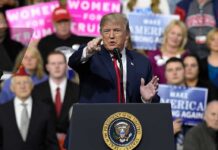
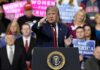
The research summary describes three incidents: a July 2024 rally shooting in Butler, Pennsylvania; a September 2024 golf-course incident in West Palm Beach; and the April 2026 shooting near attendees at the White House Correspondents’ Dinner. The same reporting also notes law-enforcement assessments that the suspects acted alone and that there is no evidence any attempt was staged. That is the core factual problem for “BlueAnon” claims: they allege coordination without publicly presented proof.
When allegations rely on insinuation rather than evidence, they tend to corrode the public’s ability to respond rationally to real threats. If a shooting is treated as a PR stunt, the pressure to investigate, prosecute, and secure public venues turns into partisan theater. For conservatives who value law, order, and institutional accountability, that erosion is not a win—it is a vulnerability, because a society that can’t agree a crime happened can’t reliably prevent the next one.
Media incentives, “BlueAnon,” and the politics of disbelief
The term “BlueAnon” is used as a left-leaning mirror to QAnon—an attempt to label conspiratorial thinking that flatters its audience while bypassing evidence. In this case, the reporting points to claims amplified by a popular left-wing podcast, where hosts suggested Trump staged the Butler shooting for political gain. Those comments illustrate how media incentives can reward the most provocative take, even when the subject is attempted assassination and public safety.
Fetterman’s rebuke lands at an awkward time for both parties. Democrats still rely heavily on anti-Trump messaging, and some activists appear tempted to treat anything that helps Trump politically as “fake.” Republicans, meanwhile, govern with narrow patience for institutions that seem captured by insiders, but they also benefit when credible voices across the aisle call out disinformation. The larger issue is that government and media credibility are fraying so badly that fringe claims can feel “plausible” to millions.
John Fetterman Bashes BlueAnon Conspiracy Theories About Trump Assassinations https://t.co/chSWvSYbDr NewGuard / YouGov etc. are polling the homeless, insane asylums, prisons…how's that for a reliable sampling frame ?
— Staedt66 (@Staedt66) May 12, 2026
For voters who believe the federal system serves elites first and citizens last, this episode reinforces a shared suspicion: powerful people manipulate narratives, and ordinary Americans are expected to pick a team and repeat talking points. Fetterman’s intervention doesn’t solve that crisis, but it does model a basic standard—when violence occurs, leaders should start with verifiable facts, not partisan fantasy. If that standard collapses, Americans lose the ability to defend liberty, enforce justice, and hold anyone accountable.
Sources:
John Fetterman Bashes BlueAnon Conspiracy Theories About Trump Assassinations
Popular left-wing podcast hosts push conspiracy theory Trump staged assassination attempt himself
John Fetterman Bashes BlueAnon Conspiracy Theories About Trump Assassinations