

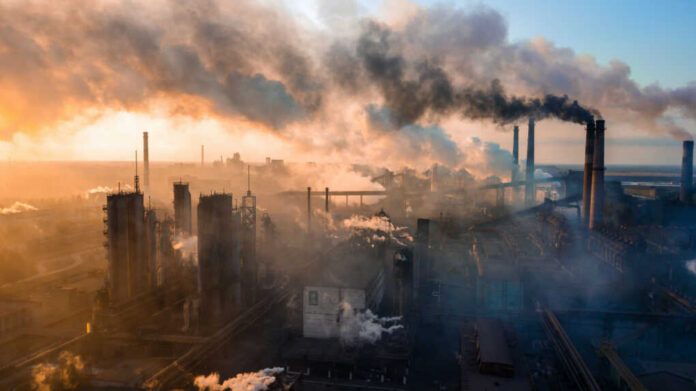
Ukraine’s latest deep strike set Russia’s Ryazan oil refinery ablaze, raising fresh questions about Moscow’s defenses and global fuel stability.
Story Snapshot
- Ukraine’s General Staff says it hit the Ryazan refinery, damaging a gasoline unit, with visible fire reported after the strike [5][4].
- Regional officials acknowledged a fire at an industrial facility after drone debris fell, but did not name the refinery [5].
- Industry reporting, citing Reuters, said crude processing at the refinery was halted following the attack [2].
- The refinery is a major site that has reportedly been targeted repeatedly and supplies the Moscow region [5][2].
Confirmed Strike Claim and Visible Fire at Strategic Refinery
Ukraine’s General Staff publicly claimed responsibility for striking Russia’s Ryazan oil refinery, asserting damage to a low-temperature isomerization unit used in gasoline production and describing this as the ninth such hit this year [5]. Independent outlet reporting described a major fire immediately after the attack, with videos and local accounts showing explosions, smoke, and damage consistent with a significant incident near the facility [4]. The combined claims point to a targeted effort against Russian energy infrastructure designed to disrupt fuel production and logistics inside Russia [5][4].
Ryazan is not a marginal plant. United24 Media reported the facility has a design capacity of 17.1 million tons per year and processed 13.1 million tons in 2024, about five percent of Russia’s total refining capacity, with supply lines feeding Moscow and nearby regions [5]. Oilprice, summarizing Reuters, said the refinery had been struck repeatedly this year, aligning with a broader pattern of Ukrainian operations that have moved from storage tanks toward complex, hard-to-replace processing units [2]. The strategic value magnifies any confirmed downtime or damage to core equipment [5][2].
Russian Response Emphasizes Debris-Caused Fire and Interceptions
Russian regional officials acknowledged a fire in the Ryazan area but framed the cause as debris from downed drones and avoided naming the refinery as the impacted site [5]. This language fits a consistent Russian narrative that emphasizes interceptions and minimizes direct hits on strategic infrastructure. While such statements can shape perception during fast-moving events, they do not directly address unit-level damage claims or provide public engineering evidence that the refinery’s core processing units were unscathed [5]. The official restraint leaves attribution and extent of damage only partially resolved in open sources.
The data stream remains asymmetric. Ukrainian and independent outlets circulated images and on-the-ground reports of flames and smoke, while Russian authorities stressed air-defense performance and avoided detailed site attribution [4][5]. This gap is common in wartime reporting, where visible fires are easier to confirm than the exact ignition source or the operational impact inside a refinery complex. Without a post-strike forensic inspection or satellite-confirmed unit damage, some uncertainty persists around the state of specific refinery equipment [4][5].
Operational Impact: Reports of Halted Processing and Repeated Targeting
Industry coverage cited Reuters in reporting that Rosneft’s Ryazan refinery suspended crude processing after the attack, with the main crude distillation unit reportedly halted and loadings not planned before early December during a previous strike cycle [2]. If sustained, such outages would indicate a material production impact that extends beyond a surface-level blaze. United24 Media and other outlets have repeatedly framed Ryazan as a frequent target, suggesting a pattern of penetration that keeps Russian defenses under pressure and forces recurring repairs [5][2].
💥 Heartbreaking update from Ryazan: Drone debris hits residential buildings near the oil refinery, killing 3 people and injuring 12 — including children. Fires rage on at one of Russia's largest facilities amid thick black smoke and oil rain reports. Thoughts with those affected…
— RandomStuff A2Z (@RandomstuffA2Z) May 15, 2026
Ukraine’s campaign appears to be shifting from symbolic hits toward disabling parts that are difficult to replace quickly, such as cracking or isomerization units, which directly affect gasoline output [2][5]. That strategy aims at stretching Russia’s maintenance capacity, driving cost, and complicating fuel supply to key regions, including the capital’s market. While independent engineers have not publicly verified the specific unit damage described by Ukraine’s General Staff, multiple fires and reported stoppages indicate that the strikes are imposing friction on Russia’s refining network [5][2].
Why This Matters to American Readers: Energy, Security, and Clarity
American drivers and homeowners feel every shock to global fuel flows. When a refinery that reportedly handles roughly five percent of Russia’s capacity experiences repeated strikes and possible shutdowns, global supply calculations shift, potentially nudging prices higher. That matters at the pump and on utility bills, especially after years of inflation and energy volatility. Clear, verified information beats propaganda from any side; separating visible fires from confirmed unit outages helps U.S. consumers anticipate impacts grounded in facts, not spin [5][2][4].
The pattern also reinforces a security lesson: critical infrastructure is vulnerable to relatively low-cost, long-range drones. American refineries, power stations, and pipelines require layered defenses, disciplined maintenance, and contingency planning. The administration’s responsibility is to harden domestic assets without bloated spending or mission creep. Measured investments in airspace awareness, redundancy, and rapid repair capacity protect families, truckers, and small businesses from cascading costs when supply lines are threatened abroad or at home [2][5].
What We Know and What Needs Verification
Facts supported by current reporting include Ukraine’s strike claim and unit-damage assertion, images of a substantial post-strike fire, acknowledgment of an industrial blaze by regional Russian officials, descriptions of repeated targeting, and industry-sourced reporting of halted crude processing after prior strikes [5][4][2]. What remains unclear without independent engineering or satellite analysis is the precise extent of unit-level damage from this latest incident and the duration of any new production outage. Until those confirmations surface, cautious reading of each side’s claims is warranted.
Sources:
[2] Web – Ukrainian Drone Strike Halts Russia’s Fourth-Largest Oil Refinery
[4] Web – Ukraine strikes Ryazan oil refinery, hits multiple other Russian …
[5] Web – Ukrainian Drones Hit Rosneft’s Biggest Ryazan Oil Refinery for …