
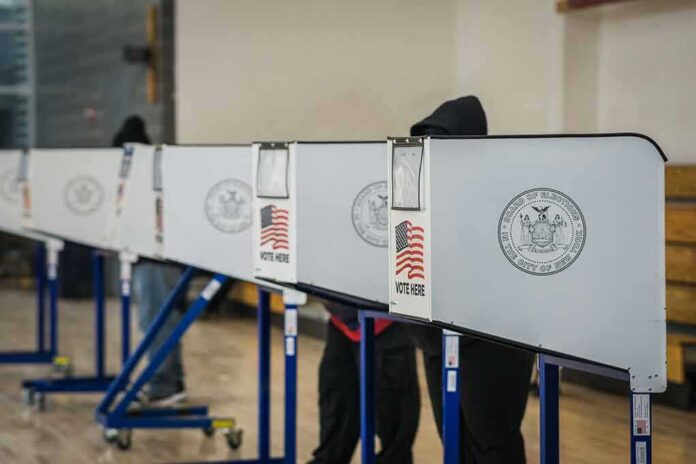
The Justice Department sent about 1,000 election monitors into all 50 states on Election Day, the largest federal watch operation in American history.
Story Highlights
- The Justice Department deployed roughly 1,000 monitors and observers nationwide for the first time ever.
- The effort is triple the size of the last midterm deployment and includes criminal prosecutors, not just civil attorneys.
- The department also sued California over a list of 20,000 alleged noncitizen voters.
- Los Angeles County officials say the list has errors, while the Justice Department defends its accuracy.
- Federal judges blocked parts of the department’s push to segregate ballots and warn election officials of prosecution.
A Record-Setting Election Day Operation
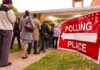
The Justice Department’s Civil Rights Division announced on November 3 that it was running its “largest monitoring effort in history,” with roughly 1,000 monitors and observers checking compliance with federal voting laws in every state at once. The scale marks a sharp jump from past midterms, when the department deployed about a third as many people to watch polls. For an administration that campaigned on restoring trust in elections, this is a concrete follow-through on that promise.
Supporters of President Trump have long argued that election oversight was too weak and too rare. This deployment answers that complaint directly, putting federal eyes on polling places in all 50 states rather than a handful of selected jurisdictions, as happened in years past.
Prosecutors Take On A New Monitoring Role
The department broke from past practice by assigning criminal prosecutors, not just civil rights attorneys and support staff, to serve as monitors this cycle. Officials confirmed the monitors will not identify themselves as prosecutors while working polling sites. The Justice Department also dropped a long-standing internal rule against sending attorneys with prosecutorial power into monitoring roles, a shift state officials in both parties say caught them off guard.
Fighting Alleged Noncitizen Voting In California
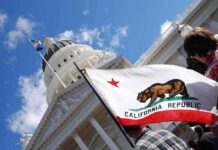
Separately, the Justice Department sued California after identifying what it called more than 20,000 “likely non-citizens” on the state’s voter rolls. The department pushed for an emergency order forcing California to segregate ballots tied to those names before they could be counted. A federal judge denied that request, allowing the state to keep processing the ballots while the broader legal fight continues.
California Officials Dispute The DOJ’s List
Los Angeles County election officials reviewed a random sample of 200 names from the federal list and called it “unreliable.” Among records with usable birthplace data, 38.9% pointed to people born in the United States, and 71.2% had no voting history at all. A separate review found 8,880 names, or 42% of the full list, did not match anyone in California’s current voter file, including 22 confirmed U.S. citizens. County officials warned the department’s proposed ballot-segregation plan could wrongly disenfranchise legally registered voters.
🚨 BREAKING: Sec. Markwayne Mullin announces DHS will be COMBING THROUGH election logs nationwide to make sure illegal aliens and noncitizens did not vote — and if they did, BIG FAFO IS COMING
"We WILL be looking at the registers and all the voting and all those that voted after… pic.twitter.com/mxsvjBsqLp
— Q Intel (@Qintel_) November 4, 2026
Courts Push Back On Pressure Tactics
A federal judge ordered the Trump administration to stop threatening state election officials with criminal prosecution over how they handled the disputed list. The Justice Department, for its part, defended the list’s accuracy and asked a judge to consider sanctions against an immigrant-rights group whose lawyers criticized the data. Both sides remain locked in a legal standoff even as ballots have already been counted.
Federal election observers are not new; the practice dates back to the Voting Rights Act of 1965, when Congress authorized monitors to check that eligible voters could cast ballots freely. Studies have found noncitizen voting itself is rare nationally. But rare does not mean nonexistent, and a Justice Department focused on enforcing the law as written, even against pushback from blue-state officials, reflects the kind of accountability conservative voters have demanded for years.
Sources:
youtube.com, justice.gov, people.com, npr.org, bennet.senate.gov, pbs.org, reuters.com, nbclosangeles.com, whio.com, oregoncapitalchronicle.com, campaignlegal.org