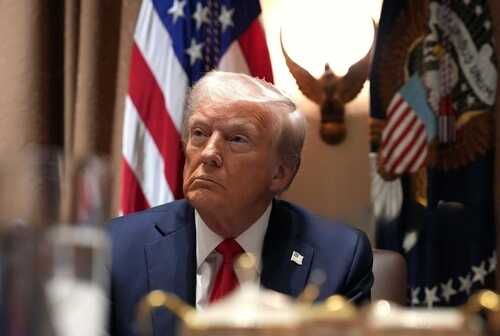
Trump fires back at Russia’s Medvedev, igniting new tensions with a tariff announcement that could reshape global trade dynamics.
Story Overview
- Trump warns Medvedev after war threats over Ukraine.
- Announces 25% tariffs on Indian imports due to its ties with Russia.
- Escalation in U.S.-Russia-India diplomatic tensions.
- Potential global economic repercussions loom.
Trump’s Bold Confrontation with Russia
President Donald Trump has publicly admonished former Russian President Dmitry Medvedev after Medvedev’s ominous warnings that Trump’s increasing ultimatums regarding the Ukraine war could lead to direct conflict between Russia and the United States. Trump’s response was sharp and striking, cautioning Medvedev to “watch his words,” a clear message underscoring the seriousness of the situation. In addition, Trump announced a 25% tariff on Indian imports, criticizing India for its trade practices and military cooperation with Moscow, further complicating diplomatic relations.
Trump brushes back Russia's Medvedev after 'war' warning: 'Watch his words' https://t.co/8qsajGm7GF
— Fox News (@FoxNews) July 31, 2025
This confrontation occurred after Trump, while in Scotland, shortened his ultimatum to Russia, demanding a Ukraine ceasefire within 10 to 12 days. Medvedev’s response, broadcasted on social media, warned that Trump’s ultimatums were a step toward war, not between Russia and Ukraine, but potentially involving the United States. Trump’s decisive rebuke and subsequent tariff announcement on India signal a significant shift in U.S. foreign policy strategy, leveraging economic measures as a form of diplomatic pressure.
Watch: Russia Ukraine War: Trump Slams Medvedev
Escalating Tensions with India
India, now caught in the crossfire, faces fresh tariffs as Trump criticizes its high trade barriers and substantial economic ties with Russia. The 25% tariff on Indian imports, effective August 1, is a direct result of India’s continued purchase of Russian oil and military equipment, actions that have irked the U.S. administration. Trump’s critique of India’s trade practices reflects longstanding frustrations over their high tariffs, which are among the highest globally. This move threatens to strain the U.S.-India relationship, historically complicated by trade disputes and India’s non-alignment stance regarding Russia.
India’s strategic ties with Russia, including its membership in the BRICS economic bloc, present a challenge to U.S. efforts to diplomatically and economically isolate Moscow. By imposing tariffs, Trump aims to exert pressure on India to reconsider its alliances and trade practices, aligning them more closely with Western stances against Russia.
Global Economic Implications
The imposition of tariffs and the potential for further sanctions wielded as diplomatic tools could have wide-ranging economic impacts. U.S. consumers may face higher prices on Indian goods, while Indian exporters could see limited access to the American market. Additionally, these measures could disrupt global supply chains, particularly in the energy and defense sectors, where India plays a significant role as a major purchaser of Russian oil and arms.
The broader geopolitical implications include a potential realignment of international alliances, with countries like India balancing their strategic autonomy against pressures from both the West and Russia. The situation also raises concerns about the stability of global markets and the potential for increased volatility as nations navigate these complex diplomatic waters.